Click here to read important disclaimer & disclosures Click here to see more about Kingsmen Resources
District-Scale Silver-Gold in Mexico

TSX-V: KNG | OTCQB: KNGRF
Mexico’s Newest High-Grade
Silver-Gold Discovery
Las Coloradas Project: The Consolidated Heart of
the Historic Parral Mining District
— Shares Still Below US$1 —
FIRST EVER MODERN DRILLING IN MEXICO’S PARRAL SILVER-GOLD BELT
LAS COLORADAS ASSAYS ON-DECK
— Early-Stage Positioning BEFORE the Next Rerate —
Click Here to Read Sponsor Disclosure
First Modern Test of Mexico’s
Historic Parral Silver-Gold District
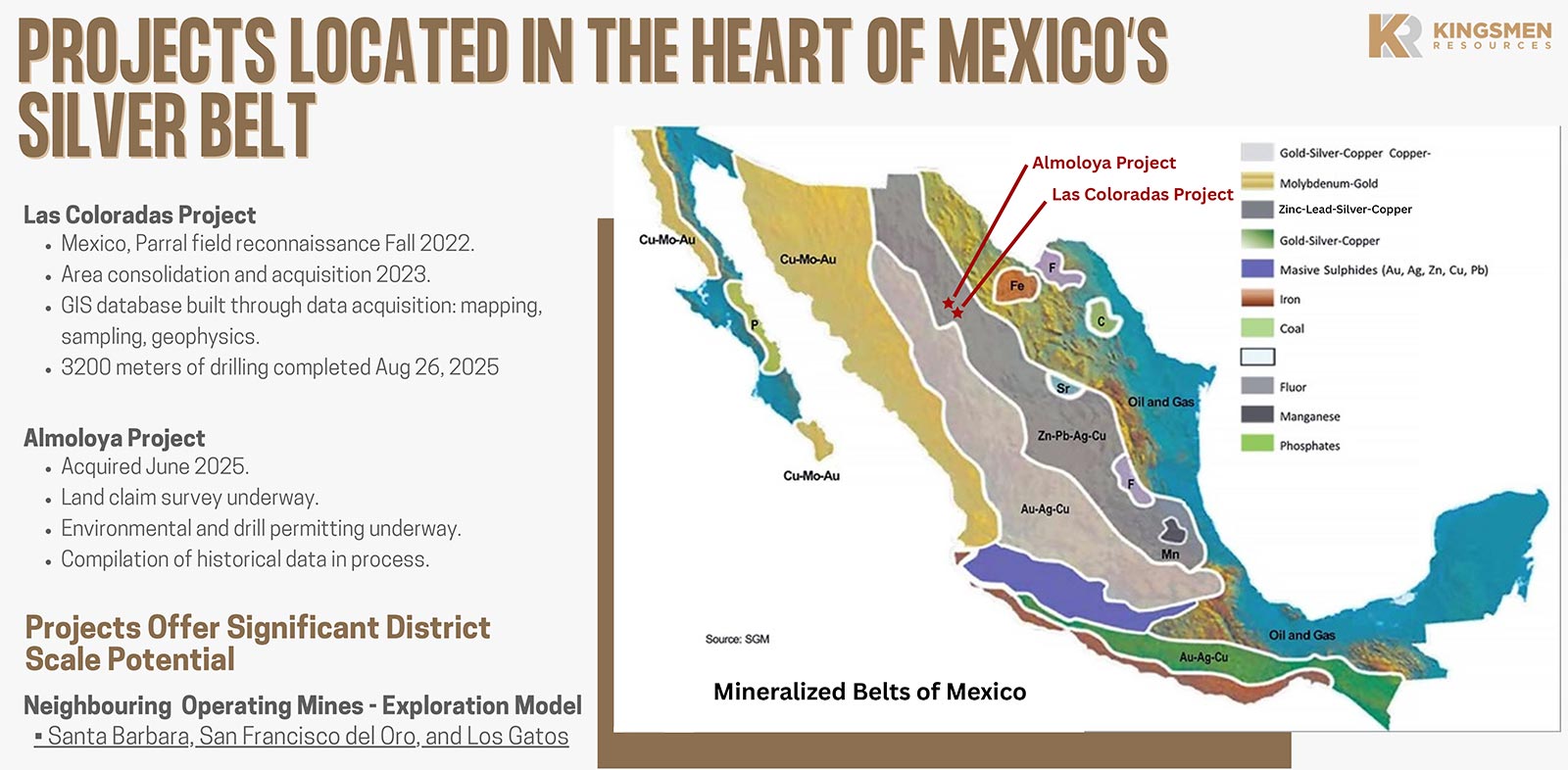
For centuries, the Parral Mining District in Chihuahua State, Mexico, has been synonymous with high-grade silver and gold.
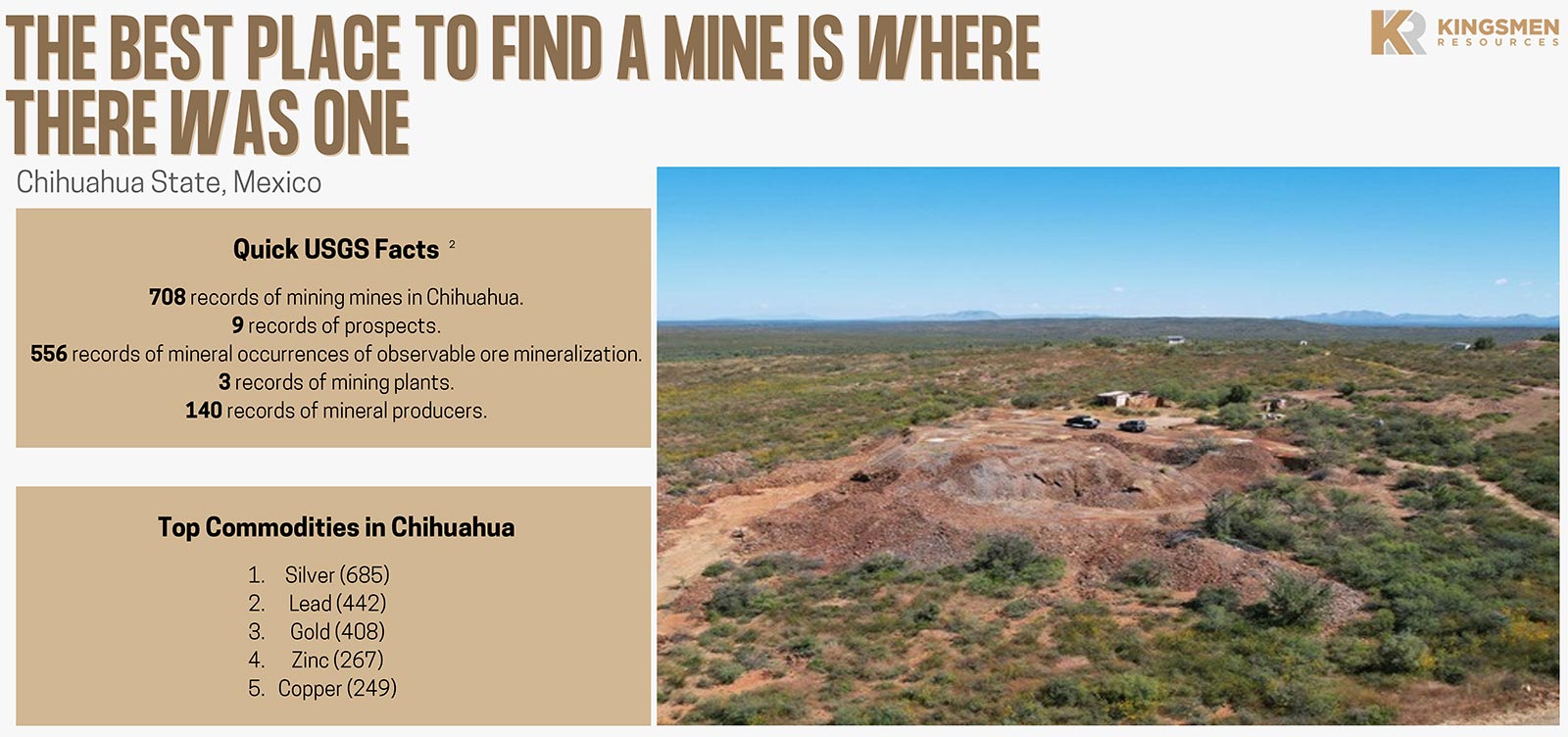
Its mines helped build the city of Parral and establish the region as one of Mexico’s most storied precious-metals districts.
Yet despite that rich history, much of the district had never been systematically explored using modern techniques — while prospective ground remained fragmented among multiple owners.
Kingsmen Resources Ltd. (TSX-V: KNG)(OTCQB: KNGRF) saw an opportunity in that fragmentation.
At Las Coloradas, the company consolidated the historic mining camp into a district-scale exploration asset, giving KNG the ability to systematically explore a much larger silver-gold system around and beyond the old workings.
And now the drill bit is testing that thesis.
Kingsmen is in the midst of a fully funded 2026 drill campaign at Las Coloradas with high-grade silver-gold results already extending known mineralization and with assays from the majority of holes drilled to date still to come.
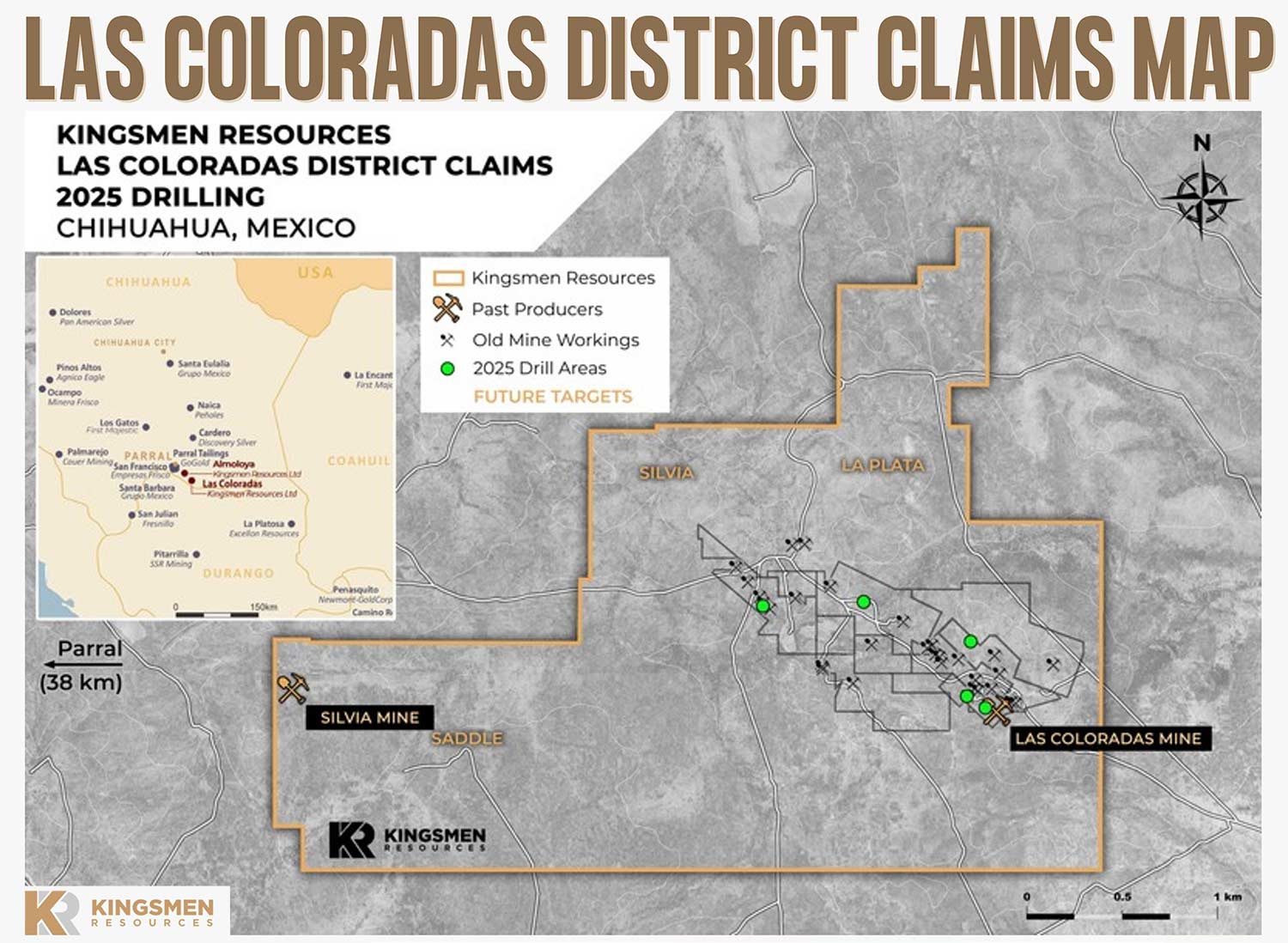
More importantly, drilling has moved beyond the known mineralized zone to test targets across the broader property, including the never-before-drilled Saddle target roughly 5 km away.
That sets up a potentially game-changing stretch of drill results as KNG works to determine just how extensive the mineralized system at Las Coloradas may ultimately be.
And Las Coloradas is only one part of the equation.
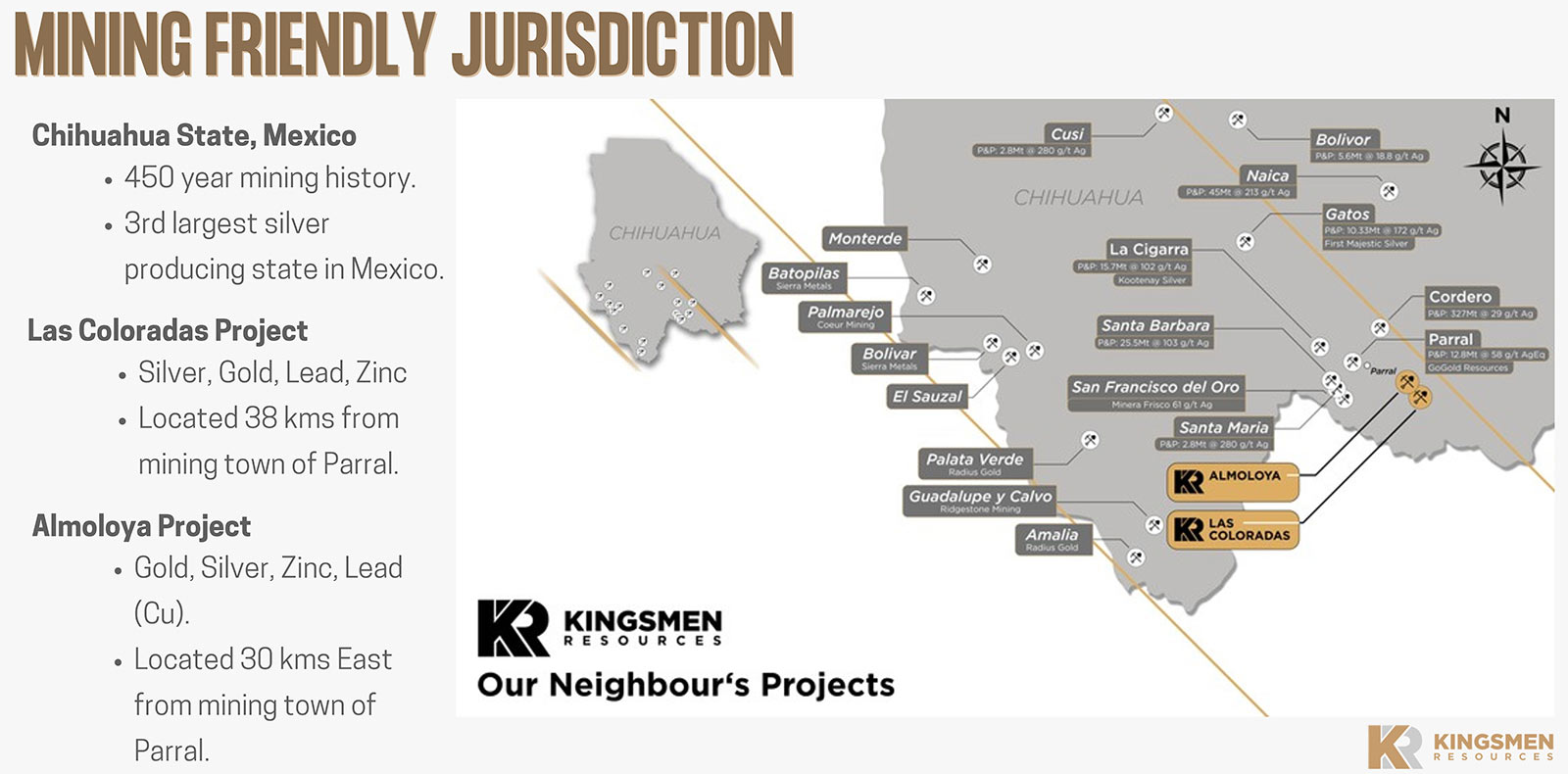
Kingsmen also controls Almoloya — a second consolidated, past-producing gold-silver project located ~30 km away in the same Parral Mining District where the drills will head to next.
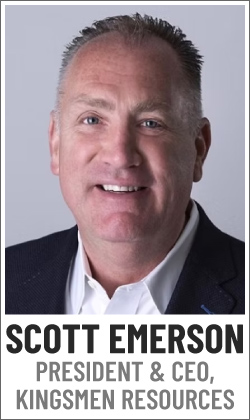
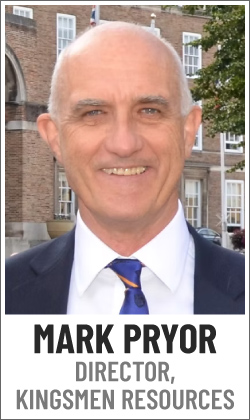
President & CEO Scott Emerson — whom you’ll meet shortly in our exclusive interview — has kept Kingsmen tightly structured and sharply focused, while professional geologist Mark Pryor brings critical in-district insight as the broader exploration model continues to take shape.
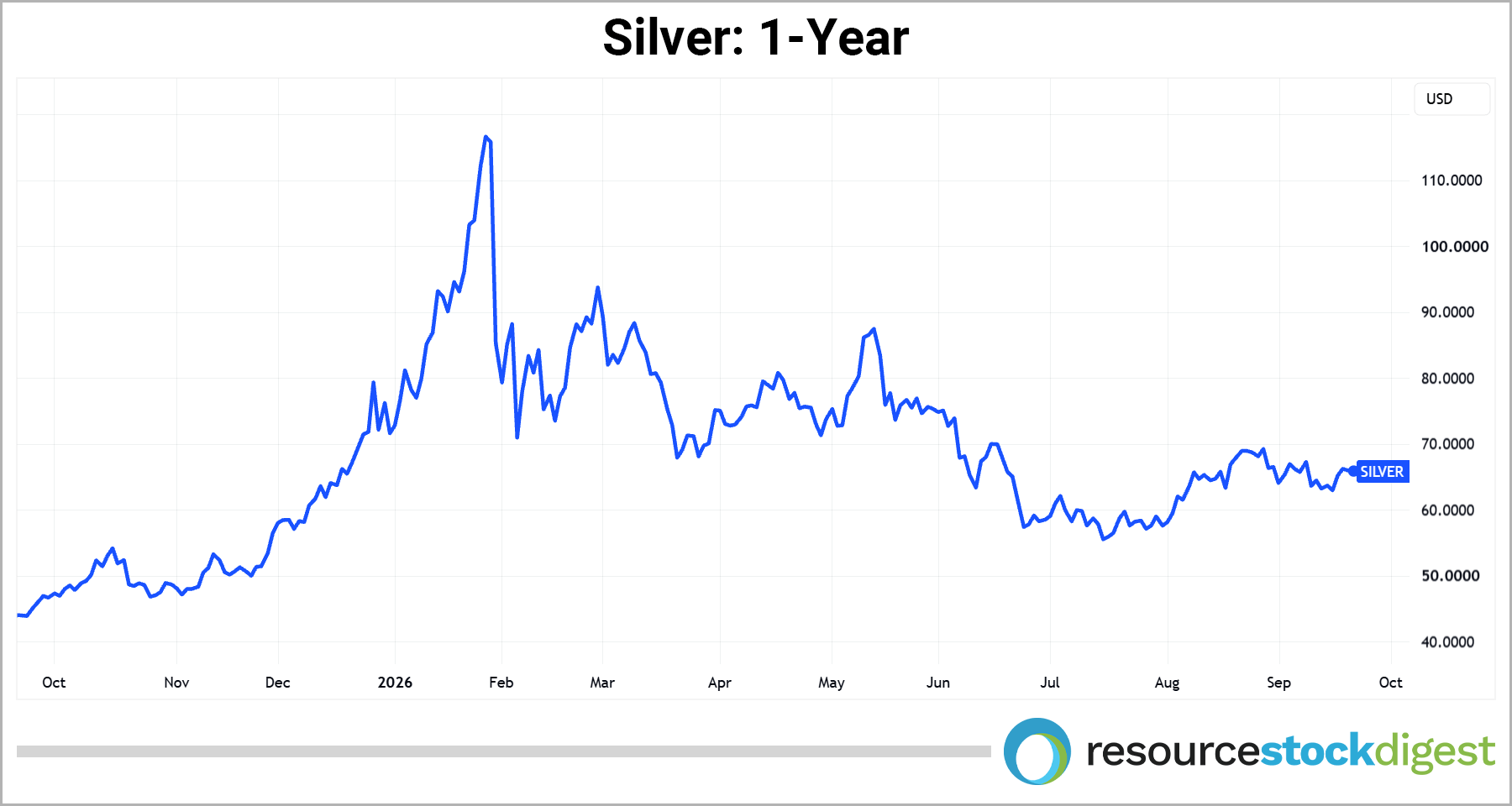
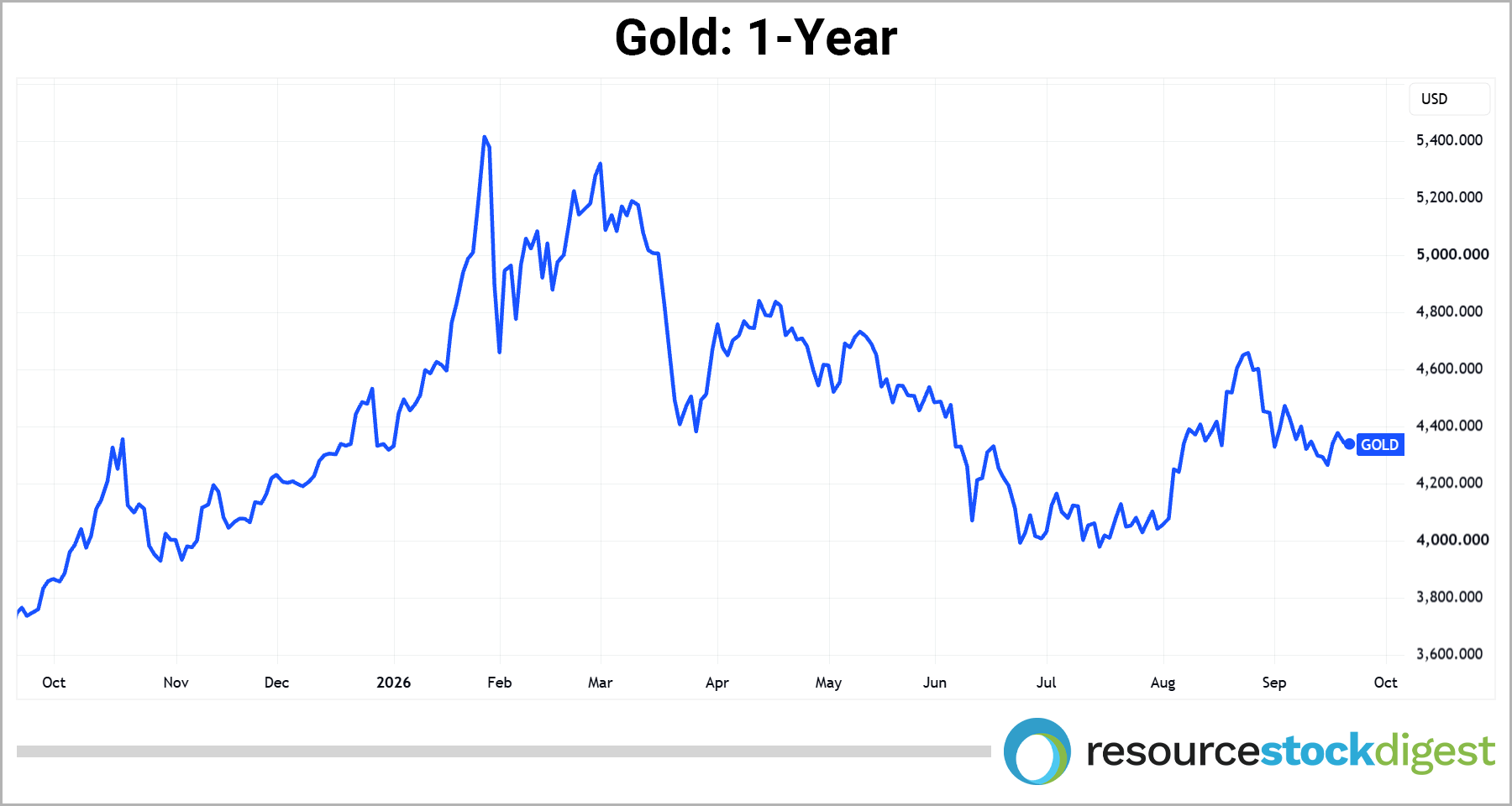
With gold above US$4,300 per ounce and silver north of US$65 per ounce, Kingsmen enters this next phase with:
- High-grade silver-gold mineralization already being expanded via the drill bit
- Assays pending from the majority of current Las Coloradas holes
- First-ever drill results from Saddle still ahead
- A second precious-metals project moving toward drilling at Almoloya
- A strong treasury and tight capital structure
For resource speculators, that creates a compelling setup: two consolidated precious-metals projects, multiple potential discovery fronts, and a substantial pipeline of drill-driven catalysts still to come.
And that brings us to Las Coloradas — the historic heart of Kingsmen’s Parral portfolio.
Las Coloradas: Flagship Silver-Gold
Core of the Parral Mining District
When Kingsmen president & CEO Scott Emerson set out to find the company’s flagship project, he wasn’t looking for “just another junior hand-me-down exploration property.”
As he puts it, he wanted a project “no junior had ever held” — something without the baggage of past fragmented exploration where he and his team could write the first modern chapter via the drill bit.
He found it in Las Coloradas.
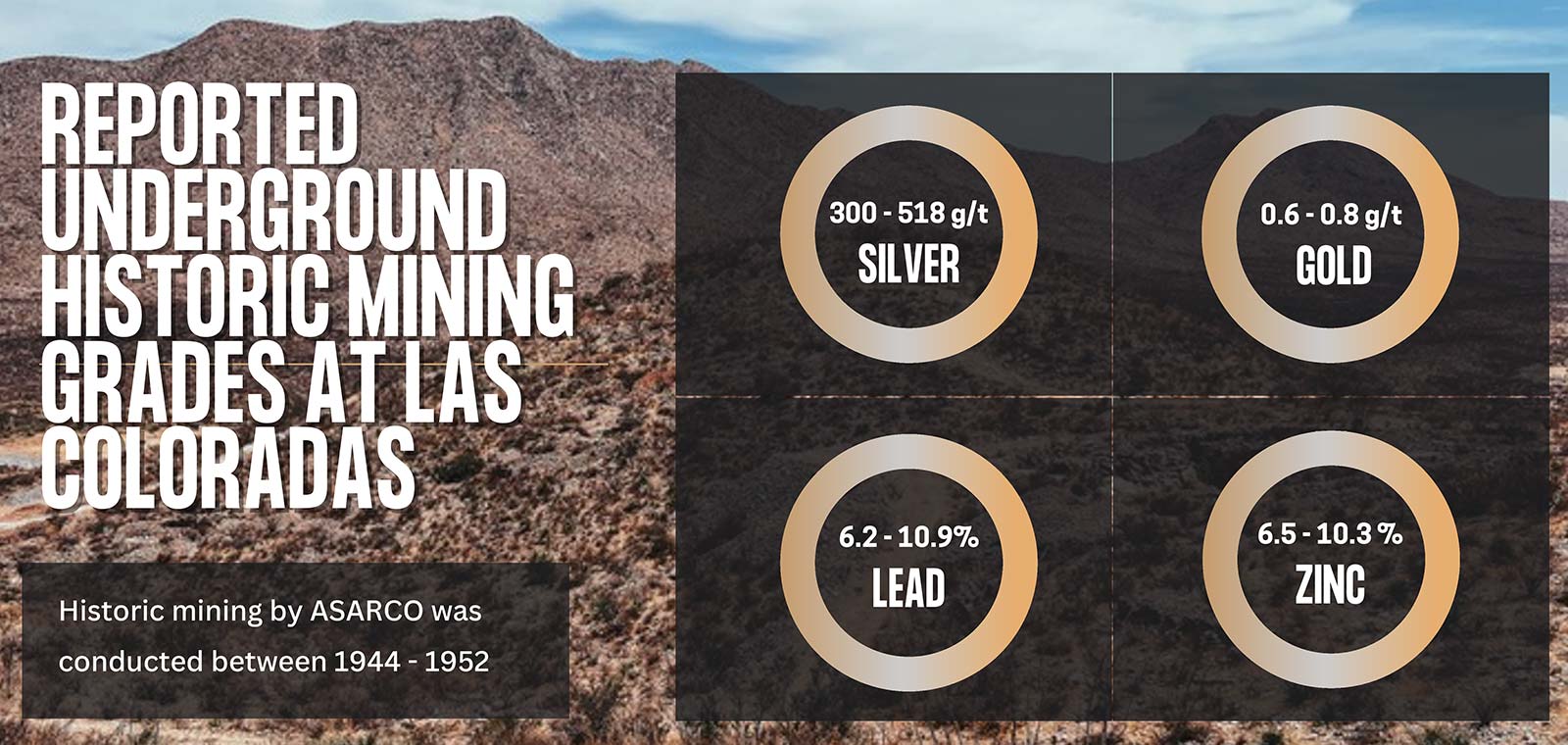
What began with a past-producing silver-gold mine — operated by ASARCO from 1944 to 1952 — has now been reshaped by KNG into a much larger, consolidated exploration opportunity.
The original Las Coloradas mine sat within a fragmented land position that Kingsmen methodically consolidated, ultimately bringing together 15 concessions and creating a continuous land package approximately 5 x 5 km in size.
As Emerson puts it,
“I don’t think you could replicate what we’ve put together, whether it be at Las Coloradas or at Almoloya.”
Within that footprint are multiple historic veins and structures, including Soledad and Soledad II, where past mining focused on relatively limited portions of a much larger mineralized system.
That distinction is important.
Kingsmen isn’t simply going back into an old mine looking for what previous operators left behind. Its exploration model is testing how far the mineralized structures extend beyond the historic workings — laterally, along strike, and at depth.
And the footprint is considerably larger than what was historically mined.
Modern exploration has traced mineralized structures well beyond the old workings while identifying additional targets across the broader property — including DBD, Aguilar, Leona, Silvia-La Plata, and Saddle.
Kingsmen has also continued sharpening that picture.
Earlier this year, the company completed property-wide high-resolution satellite topographic surveys at Las Coloradas, adding another layer of precision to its 3D exploration model and drill targeting.
Las Coloradas also benefits from its location in an established mining district near the city of Parral with access to regional infrastructure and an experienced mining workforce.
Most importantly, KNG now controls the ground necessary to test the broader geological thesis systematically.
As Emerson puts it:
“We wanted a project with real scale — one where nobody could say, ‘We’ve already tried that and it didn’t work.’ Las Coloradas gives us exactly that: a historic mine in the middle of a district that’s never been properly drilled.”
That original thesis is no longer theoretical.
The drill bit is now testing it — and the 2026 program is beginning to reveal just how much larger the Las Coloradas system may be.
2026 Drilling Expands the High-Grade
Silver-Gold System
Kingsmen’s maiden 2025 drill program provided the first modern subsurface test of Las Coloradas, returning multiple high-grade silver-gold intercepts and giving the company clear targets for a much larger, fully funded 2026 campaign.
Now the emphasis has shifted from initial discovery to expansion.
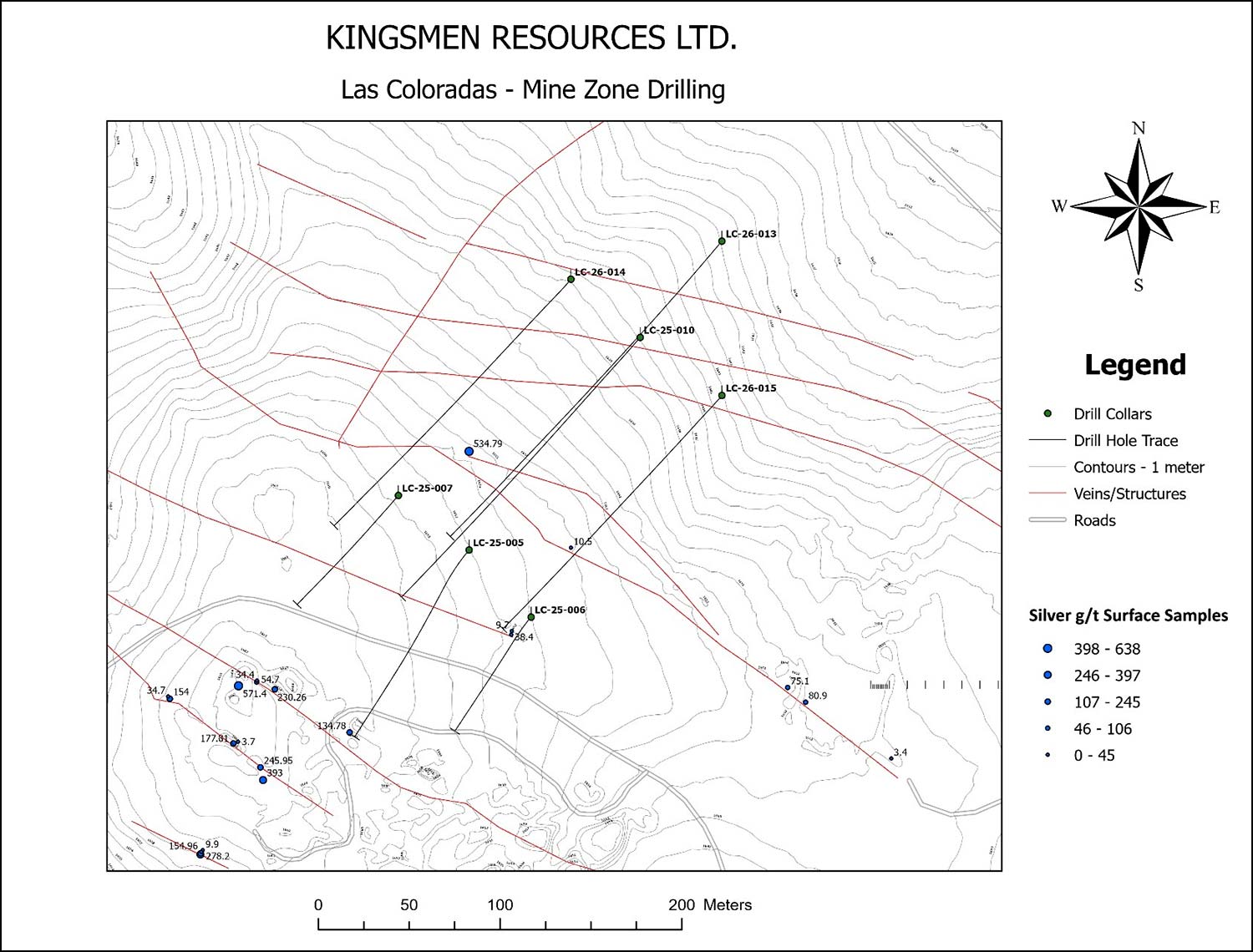
The first 2026 result came from Hole LC-26-013, the deepest hole drilled at the Soledad system to date and a 54-meter down-dip step-out from previously reported Hole LC-25-010, returning:
- Hole LC-26-013: 5.20 meters at 257 grams per tonne (g/t) silver-equivalent (AgEq), including 1.40 meters at 641 g/t AgEq (425 g/t silver)
Together with the two earlier holes in the same drill fence, the result successfully extended silver-gold mineralization across a minimum 135 meters of vertical depth with mineralization remaining open at depth and along strike.
Kingsmen followed that drill-hit up in August with two aggressive step-outs at the Mine Zone, extending mineralization across a minimum 106 meters of strike in three drill fences spaced 50 meters apart and to a vertical depth of 155 meters:
- Hole LC-26-014: 1.40 meters at 433 g/t AgEq (239 g/t silver), including 0.75 meters at 787 g/t AgEq (435 g/t silver)
- Hole LC-26-015: 1.70 meters at 185 g/t AgEq (139 g/t silver), including 0.68 meters at 438 g/t AgEq (336 g/t silver)
And most recently, in September, drilling confirmed high-grade mineralization on the new #8 structure situated 150 meters west of high-grade Hole LC-25-010:
- Hole LC-26-020: 6.45 meters at 218 g/t AgEq (199 g/t silver and 0.53 g/t gold), including 1.95 meters at 338 g/t AgEq (313 g/t silver)
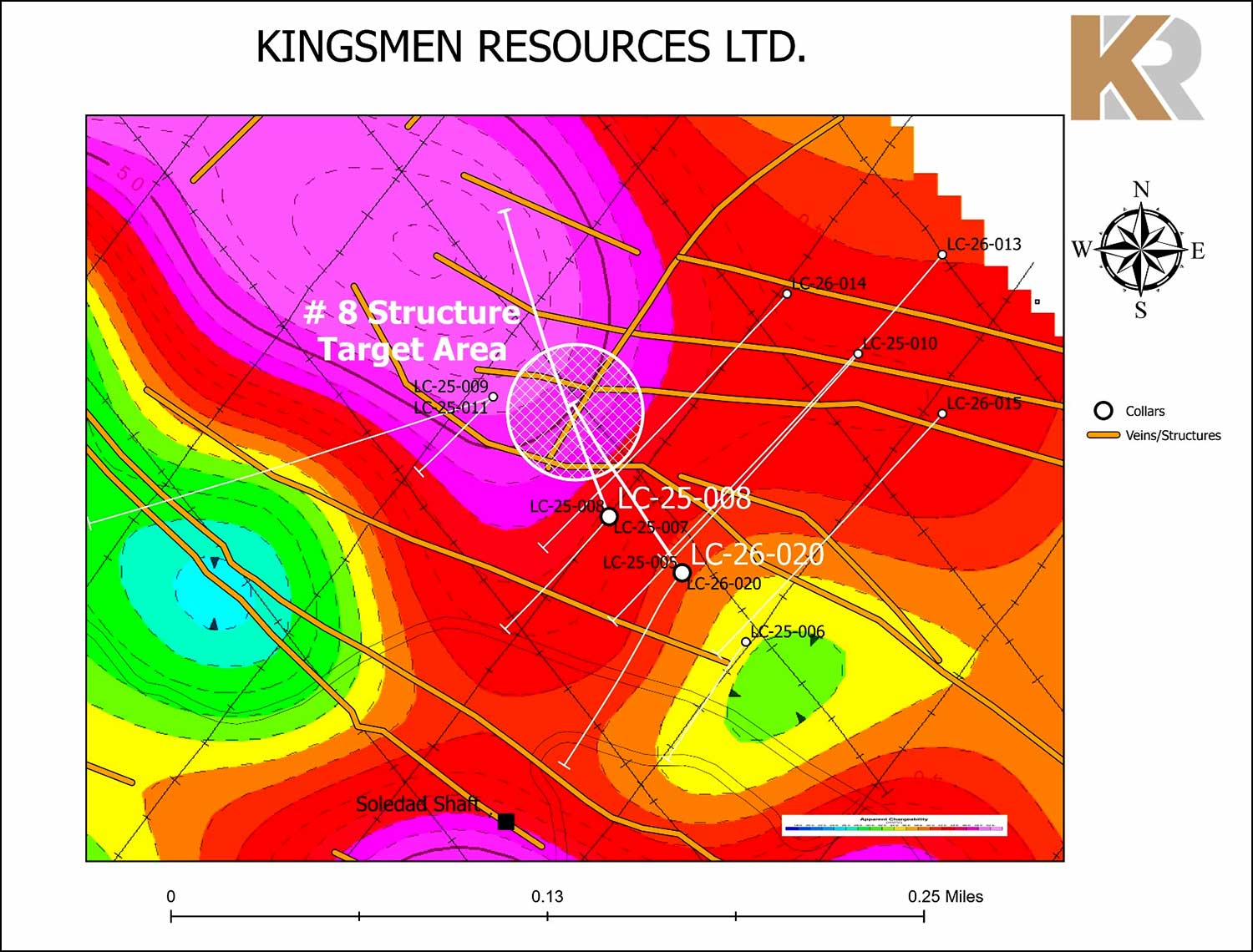
With high-grade mineralization now intersected across both the Soledad system/Mine Zone and the new #8 structure, the focus turns to the substantial pipeline of assays still ahead from targets across the broader Las Coloradas property.
And again, the entire system remains wide open at depth and along strike.
Emerson sums it up nicely:
“...The significance of this discovery is that it demonstrates that significant mineralization occurs in more than one structure. This shallow, near surface high-grade mineralization is structurally controlled, and we believe it indicates a deeper source.”
And that may be the most important takeaway from the 2026 results so far.
Kingsmen is beginning to establish continuity and scale within the Soledad system while also demonstrating high-grade mineralization across multiple structures — with substantial room for further expansion across the broader Las Coloradas property.
As of the latest results, KNG has reported assays from just 4 of 19 holes drilled at Las Coloradas with results still to come from multiple targets, including the high-priority Saddle Target situated some 5 km away from the primary mineralized zone.
And while those pending assays set up plenty of near-term catalysts at Las Coloradas, Kingsmen has another potential source of district-scale drill-driven news waiting in the wings: Almoloya.
Almoloya:
Kingsmen’s Next Drill Front in Parral
As additional assays continue to arrive from Las Coloradas, KNG is preparing to put the drills to work at Almoloya next — opening a second front of drill-driven catalysts within the same Parral Mining District.
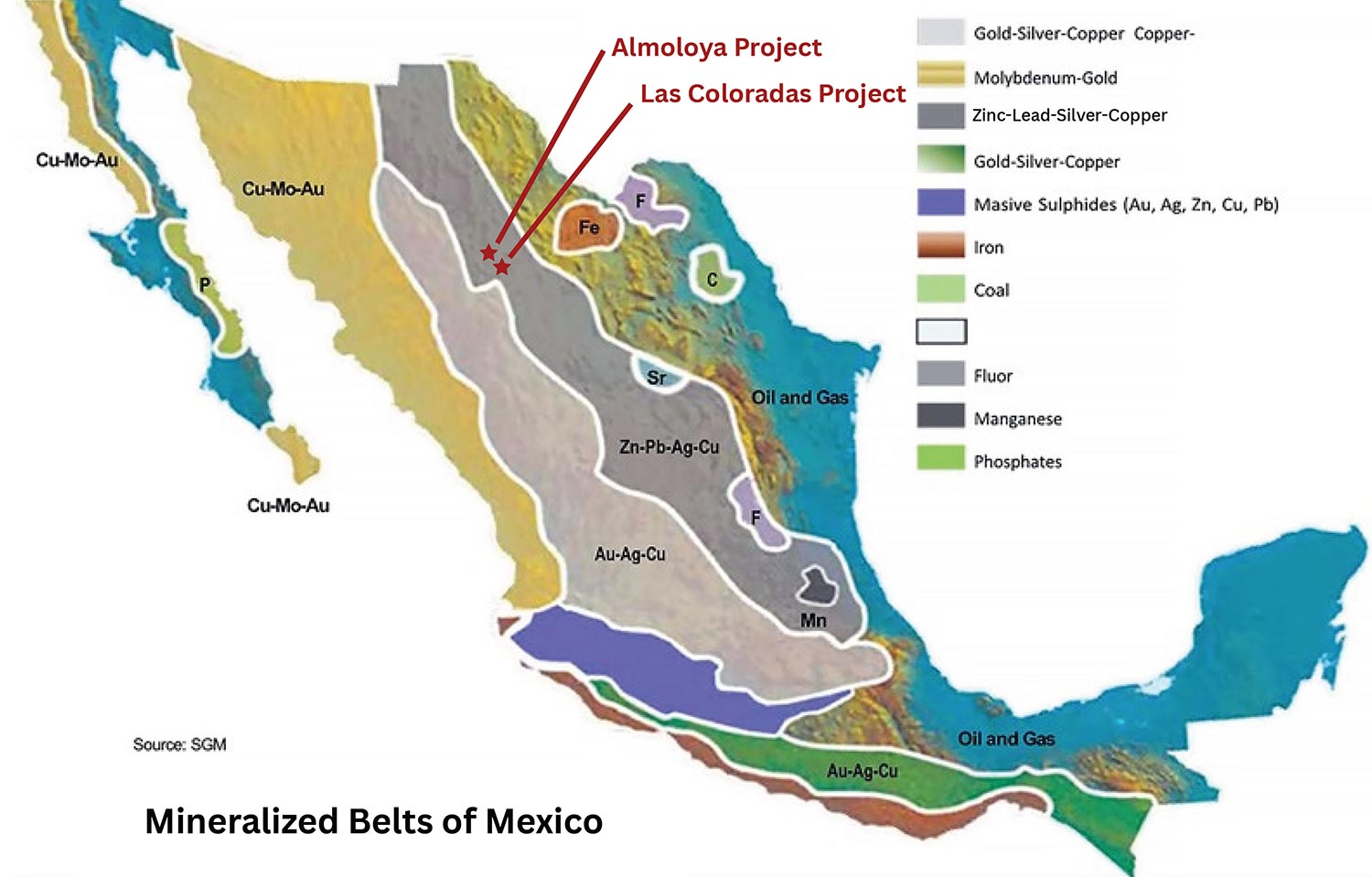
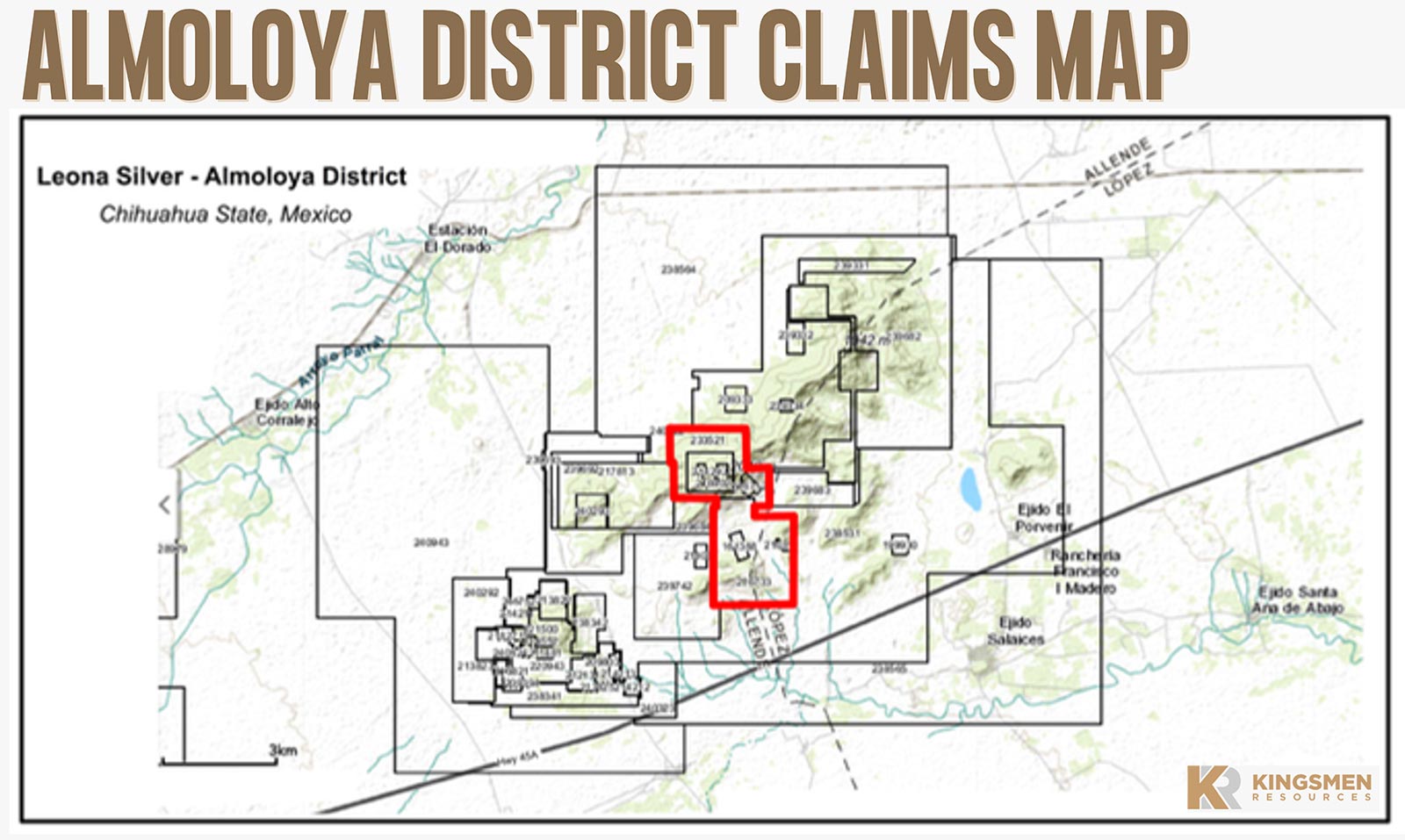
Located 30 km northwest of Las Coloradas, Almoloya is Kingsmen’s second consolidated, past-producing precious-metals project in the district.
And there is an important parallel between the two projects.
Much like Las Coloradas before Kingsmen arrived, Almoloya had been fragmented among multiple claim holders, limiting the ability to systematically evaluate the broader mineralized system.
Kingsmen has now brought those pieces together, creating another cohesive land package that can be explored as a unified project for the first time.
The difference is in the metals mix.
While Las Coloradas is primarily a high-grade silver story with an important gold component, Almoloya is viewed by the KNG team as a predominantly gold-focused system with silver upside.
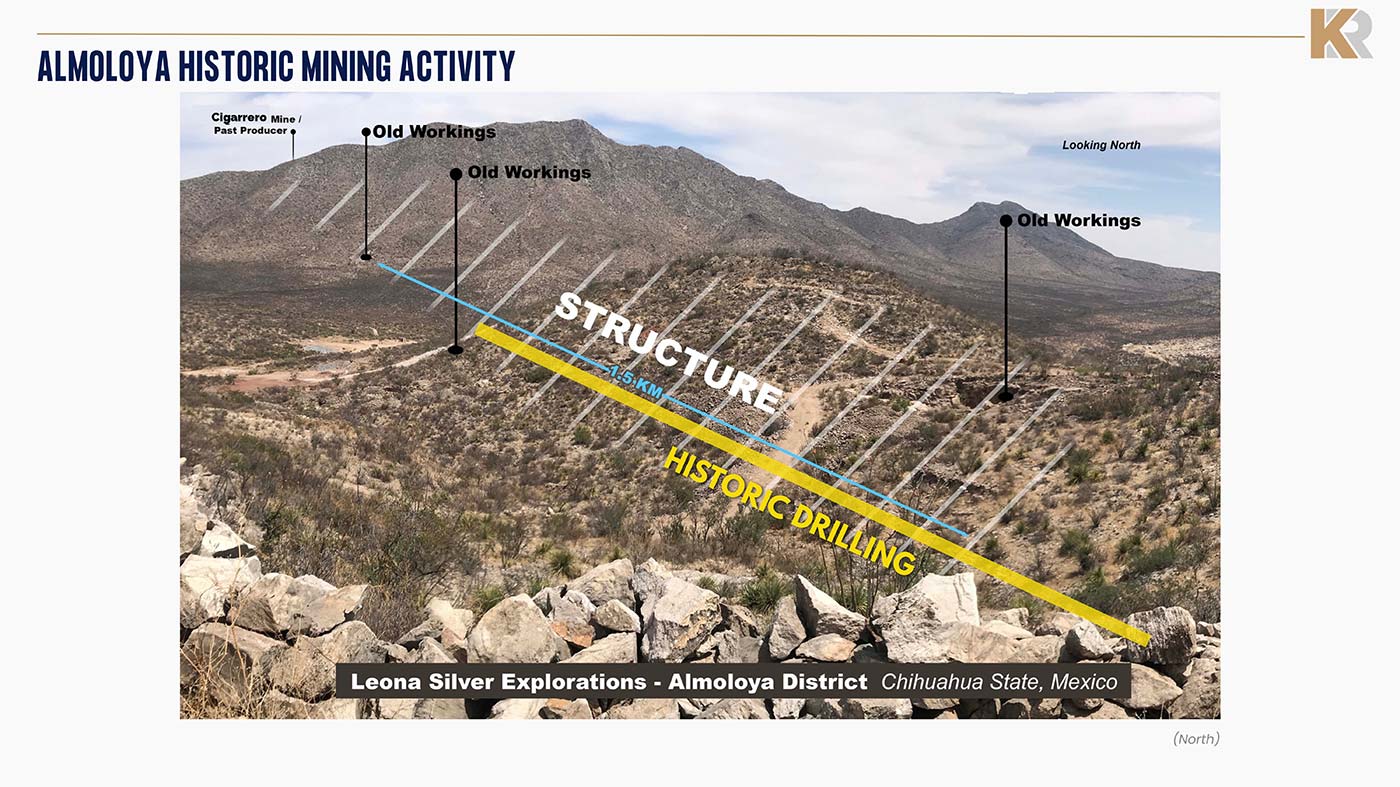
The project also comes with extensive historic drilling, past production, and a substantial historical dataset that Kingsmen can use to help guide its exploration strategy.
As Emerson says:
“At Almoloya, the combination of historic production, extensive underground workings and compelling structural controls provides an exciting opportunity to unlock significant new gold-silver discoveries. 2026 will be a transformative year for the company.”
Kingsmen is advancing the groundwork needed to put that thesis to the test.
Earlier this year, the company completed 28 sq km of high-resolution satellite topographic surveying at Almoloya, providing a precision framework for geological mapping, geochemistry, geophysics, and drill targeting.
Importantly, Las Coloradas and Almoloya shouldn’t be viewed in isolation.
The two projects sit only 30 km apart within the same established Parral mining district, creating potential synergies in exploration, personnel, logistics, infrastructure, and the sequencing of work as both projects advance.
Their proximity allows Kingsmen to leverage its regional knowledge and exploration experience across two distinct precious-metals opportunities within a relatively compact geographic footprint.
That gives KNG flexibility few juniors at this stage possess.
With assays still pending from Las Coloradas and Almoloya next in line for drilling, Kingsmen is positioning itself to have two precious-metals projects generating drill-driven catalysts from the same district.
The Right Metals Mix at the Right Time
Silver Above US$65. Gold Above US$4,300.
KNG is Advancing at the Right Moment.

Kingsmen is advancing two precious-metals projects at a particularly favorable point in the cycle.
With gold above US$4,300 per ounce and silver north of US$65 per ounce, both metals are trading at levels that put renewed attention on high-grade exploration and discovery.
And KNG offers exposure to both.
At Las Coloradas, the company is expanding a high-grade silver system with an important gold component while a substantial pipeline of drill results remains ahead.
At Almoloya, the emphasis shifts more toward gold — giving Kingsmen another potential source of precious-metals discovery within the same Parral Mining District.
That combination matters.
Kingsmen doesn’t need to choose between a rising silver market and a rising gold market. Its two-project Parral strategy provides exposure to both metals while the company advances multiple drill-driven catalysts within a relatively compact geographic footprint.
For resource speculators, the timing is particularly compelling.
Strong metals prices can provide a powerful backdrop… but ultimately the drill bit still has to deliver. And that is what makes the months ahead so important for Kingsmen.
Las Coloradas is already delivering high-grade silver-gold results with the majority of assays still ahead. Almoloya will open the next drill front.
The combination gives KNG multiple opportunities to create value through the drill bit at a time when both of its principal metals are commanding significant market attention.
And with that catalyst pipeline firmly in place, it’s time to hear directly from the person overseeing that strategy.
Exclusive Interview with Kingsmen Resources
President & CEO Scott Emerson
With assays pending across Las Coloradas, first-ever Saddle results ahead, and Almoloya next in line for drilling, Kingsmen has multiple catalysts lining up across its Parral portfolio.
To get a firsthand look at what the latest results are revealing — and what comes next as KNG continues testing the district-scale potential of its Parral portfolio — our own Gerardo Del Real of Resource Stock Digest and Junior Resource Monthly caught up with Kingsmen president & CEO Scott Emerson.
Please enjoy!

Gerardo Del Real: This is Gerardo Del Real with Resource Stock Digest. Joining me today is the president & CEO of Kingsmen Resources.
Scott, it’s great to have you back on. How are you doing today?

Scott Emerson: Doing well, Gerardo — we’re full-steam ahead.
Gerardo Del Real: Listen, I want to get into the recent results. I have a couple of questions as a biased shareholder about the results, but I want to start by commending you and the team because gold wasn’t always $4,300 with a lot of room to run. Silver wasn’t always $65 with a lot of room to run.
A few years ago, you came to me and to our mutual friend Jeff Phillips and a couple of others and said, “I have this great idea of consolidating all of these fractured land packages and putting together these precious metals districts.”
And we said, “Well, that’s great. Everybody has great ideas. Why don’t you come back to us when you get it done, Scott?”
And all you did was spend the next few years putting the pieces together, ultimately consolidating not one but two district-scale projects — Las Coloradas and Almoloya.
So you now have under your belt two precious metals districts in a raging bull market for precious metals. And you have ~C$15 million in cash. And somehow the market has decided that that’s only worth ~C$40 million today.
I suspect that rerating is going to happen swiftly and violently to the upside if you keep delivering with the drill bit. Congratulations on that front. Let’s talk recent drill results.
Scott Emerson: I’m ready. You took away all my thunder. That was a good introduction. Thank you.
Gerardo Del Real: No, listen, hopefully there’s more thunder. You released assay results from two additional diamond drill holes, holes 14 and 15. The headline number is 1.4 meters of 433 grams per tonne silver equivalent, of which 239 grams per tonne was silver at Las Coloradas. You’ve also gone to great pains in the release, I think, to explain the approach to the drilling.
You talked about the minimum strike length now of 106 meters and three drill fences that are spaced 50 meters apart to a vertical depth of 155 meters. I want to make sure that I highlight and emphasize to the audience that this has been a small part of the land package that’s being tested.
And I want to start there. Let’s talk about the approach to the drilling specifically in these two holes.
Scott Emerson: Sure. I think even to step back further, Gerardo, if the listeners can visualize it, the land package is 5 km by 5 km. And both Las Coloradas and Almoloya had past-producing historical mines on the claims. Why that’s important is because I always use the analogy: the best place to find a mine is where there was one.
And for different reasons, Las Coloradas was mined from 1944 to 1952, and then it stopped mining.
That was because of the fragmented district. It was broken up, and it’s had no modern-day exploration on it since that time. And for Almoloya, it’s even earlier.
I say that because where we have currently just announced our drill results is a very small portion of the entire project area. It’s one target that we identified through 2025 drilling. We did a 3,000-meter program there.
If you recall, after yourself and Jeff Phillips and guys stepped in, we hadn’t drilled anything. Last year was really our discovery year, if you want to put it that way, where we not only drilled 12 holes, we had success in 12 holes, but we had it over a very large landscape, if I could kind of visualize it like that.
Fast-forwarding to where we are today, we went where we drilled last year and had success in one hole. That was LC-10.
That was a high-grade hole. I think it was over a thousand grams per tonne silver. We then stepped out from there.
I guess the best way for me to describe it to your listeners is if you take three vertical lines and you space them an inch apart on a piece of paper, think of three holes drilled in the middle line and two holes drilled to the north, or on the top line, and two holes below.
So now we’re able to outline a resource, and we’re starting to understand the geology better. But that again is only in that mine area. We’ve subsequently stepped out roughly 800 meters to what we call the DBD Zone.
Then we stepped out another 800 or so meters to the Aguilar Zone. And then we’ve stepped out 5 km to what we call the Saddle target. Visually, I think for your listeners, you can think of it as this huge landscape.
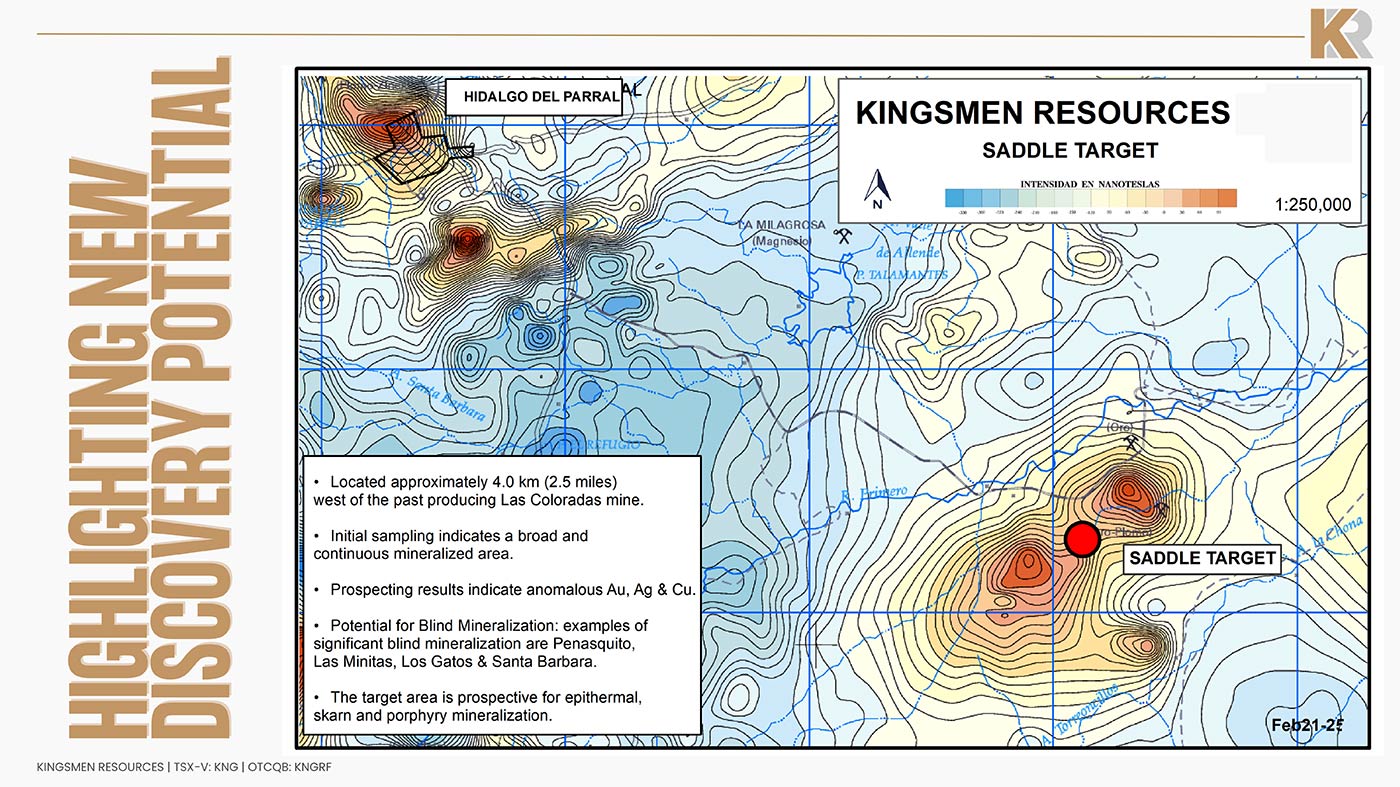
We’ve only got 19 holes into the program so far. Again, the opportunity lies in: can we tie this all together, and how big is this district? And the eye on the prize is to ultimately have someone, one of our neighbors — and we’ve talked about it, Gerardo, several times — come and say, “Hey, they’re onto something. We want this.” That’s my short answer.
Gerardo Del Real: I love the short answer. I’m going to play devil’s advocate here. I’ll be really honest with you. And even today, with the stock up some 14%, your market cap is still just ~C$40 million. So when I look at that, I go, “Well, what is the market wanting?”
And I’ll be honest with you, I think the market wants two things because it’s what I want as a shareholder. I want to see the step-out results, and I sure in the heck want to see what you hit over at the Saddle target.
If you come close to proving mineralization on minable widths across that broader system, I think you’re off to the races, especially in this metals environment.
The other thing that I want to see is true widths, which is also something several shareholders have mentioned to me. As soon as I read the last couple of releases, I thought: these 1.4 meters of 433 grams per tonne silver equivalent from 190 meters are very consistent with what was mined back in the day, obviously at much lower silver prices.
But the one nagging question that I have is: when do we start seeing the true-width aspect to be able to provide more confidence to shareholders that when we see 1.4 meters and we go, “That’s minable,” that we’re actually talking about 1.4 meters?
Scott Emerson: Gerardo, with respect to minable widths, again, if I can just kind of lay out a description here, think about the wall in front of you, and think about us drilling one hole at a 45-degree angle through that wall.
Then we’re going to have to do a second hole. And that second hole, where it enters and where it exits, when we can measure the distances between those two holes, then we can get into true width. So the short answer is it requires more drilling.
Right now, we’re just trying to identify and better understand the geology. And you’re going to get into true widths here probably by the end of the year as we continue to drill these out.
Again, hopefully that’s a simple explanation, but that’s how you look at true widths. We do know they mined similar widths back in the day.
We have those historical records. So that’s what gives us the confidence to say, “Hey, look, are we going to be able to grow this?” And that’s what we’re proving out right now.
And going back to your first question, those step-out holes are coming. So stay tuned, and you’re going to see a lot more results.
Gerardo Del Real: I’ll go on record and say I’m highly confident that I think we’re going to see some good news. And I say that, one, I’m biased, but two, I say that because of the mineralization in the district and because of the fact that you’re seeing a lot of the same stuff at surface in those areas — and correct me if I’m wrong — as the areas where, frankly, you’re hitting right now.
I’ll also say that if the drill bit and Mother Nature prove that there’s a lot more of this stuff across the broader system, I think you get a significant rerating higher, and the institutional support that you’ve received is going to step into the market in a really pronounced way.
And with the share structure that you have, which is amongst the best in the junior space, it could be fireworks sooner rather than later. How are the assay labs treating you, and when do you expect to get more results on some of these step-outs?
Scott Emerson: I think we’re due for another batch of assays in the next two to three weeks. That’s realistic because our last samples went in about three weeks ago.
We’re seeing about a six-week turnaround on results right now, so we’re going to have pretty consistent news flow with respect to numbers and geology and what this is going to deliver to us.
Gerardo Del Real: Do you expect the Saddle target in the next batch of results?
Scott Emerson: Yes, I think we’ll have Saddle target results in the next three to five weeks. In the meantime, we’re going to continue to do the work that needs to be done to basically lay out what it is that we have. Again, Gerardo, the known targets were generated through mapping, sampling, and geophysics.
We’ve generated new targets since then. Just to give you an idea, we had crews in the field that were 400 meters from Aguilar, and we’ve got a nice surface expression of high-grade silver. That’s our drill target.
Again, I think when you entered into this with me, we talked about having pretty consistent news throughout the year and having drill programs running. And that’s exactly what we’re doing. We’re executing as a junior company, and I think that’s important, and we’re delivering results.
Gerardo Del Real: I can’t wait for the results. Thank you for your time, Scott.
Scott Emerson: Thank you, Gerardo.
The Kingsmen Resources Opportunity
Kingsmen Resources has more momentum — and more potential catalysts — than at any point in the company’s history.
At Las Coloradas, the drills are expanding high-grade silver-gold mineralization while demonstrating that significant mineralization occurs across multiple structures.
And speaking of catalysts ahead, KNG has reported assays from just 4 of 19 holes completed in the current program with results still to come from multiple targets.
That means upcoming assays have the potential to provide important new data not only about the expansion of known mineralization but also about the broader district-scale opportunity Kingsmen set out to test when it first consolidated Las Coloradas.
Meanwhile, Almoloya adds a second front of drill-driven catalysts as KNG prepares to put the drills to work there next.
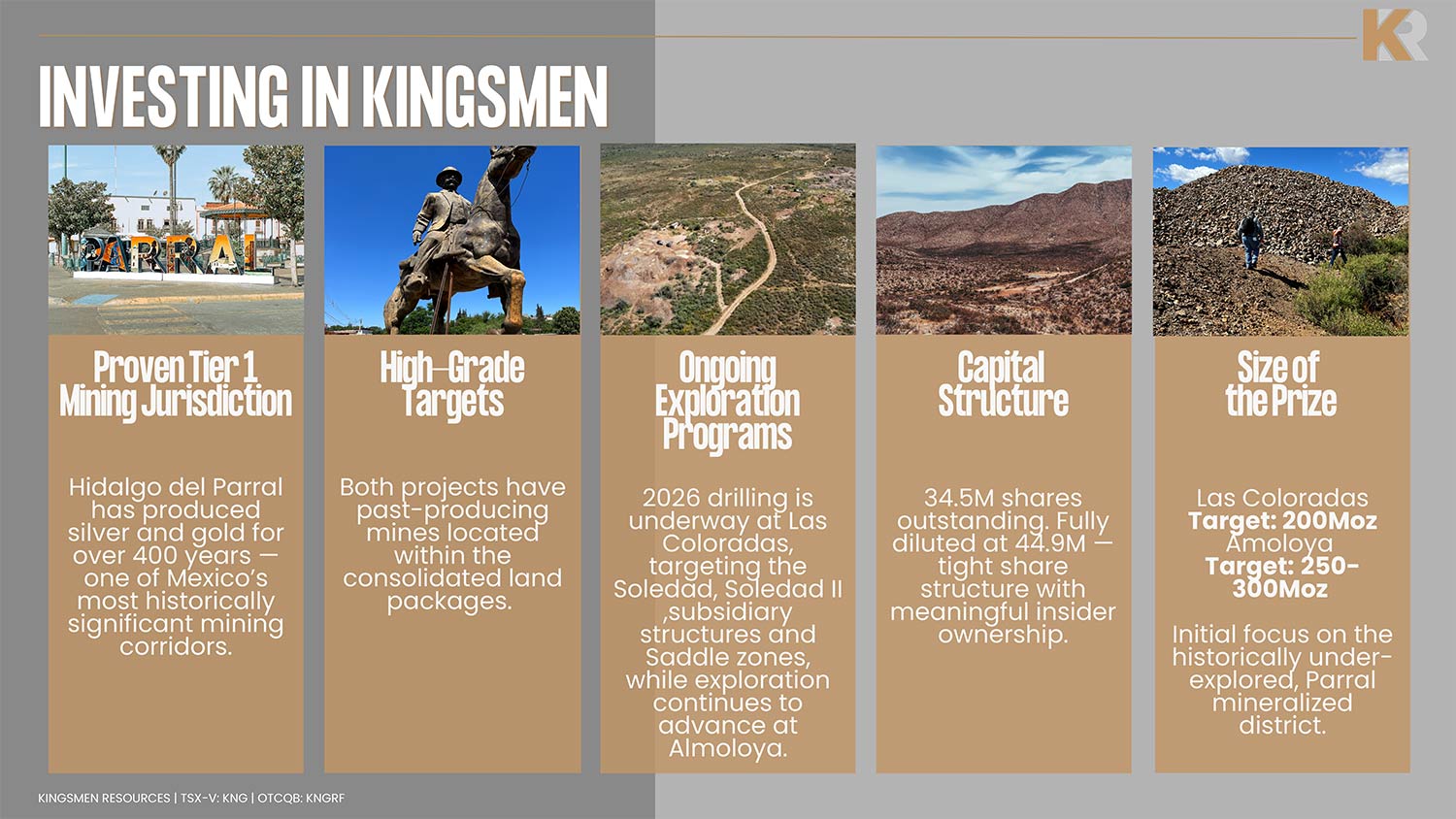
And with approximately C$15 million in cash, Kingsmen has the treasury to execute.
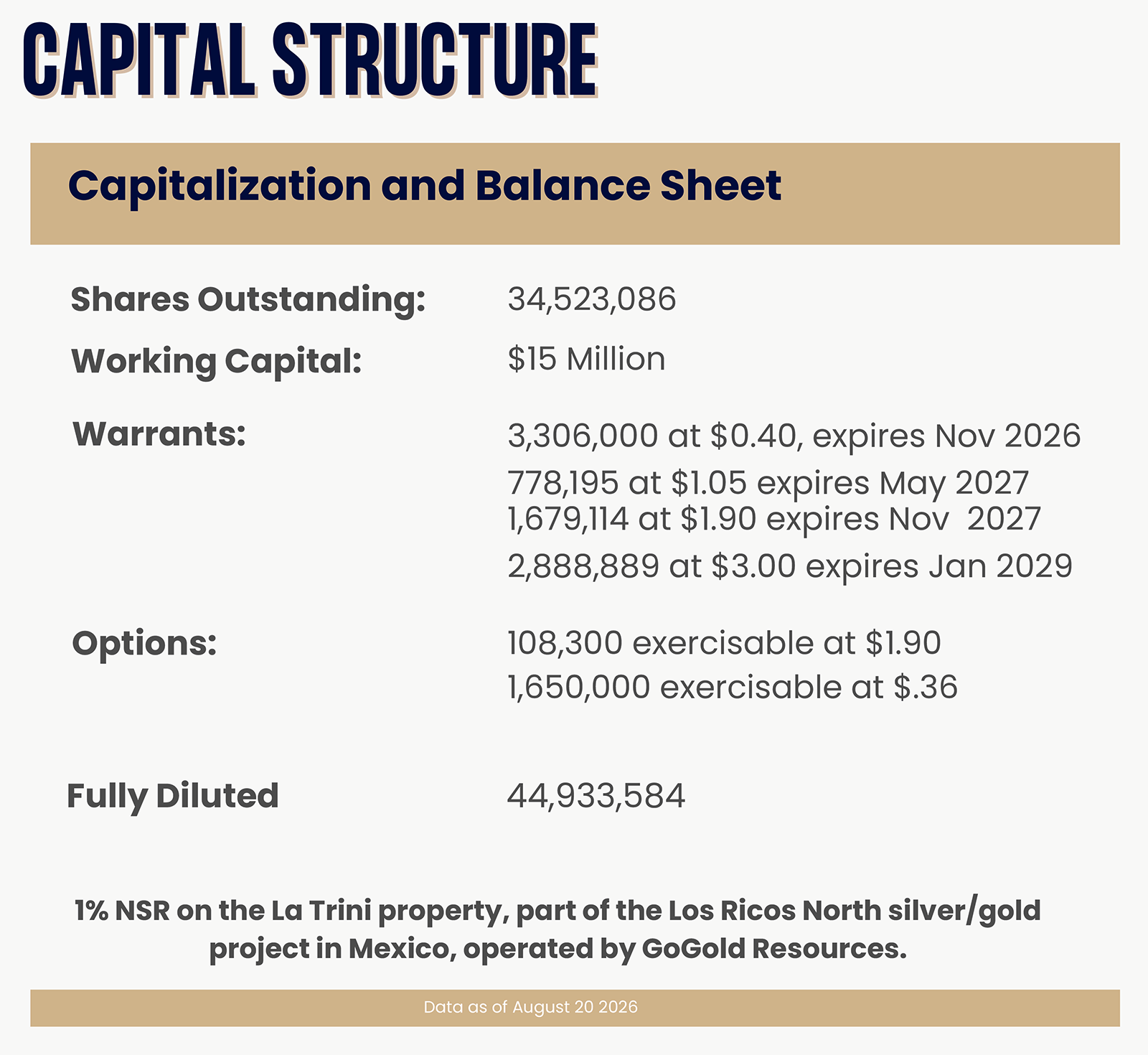
The company also remains tightly structured with approximately 34.5 million shares outstanding — providing meaningful leverage to exploration success.
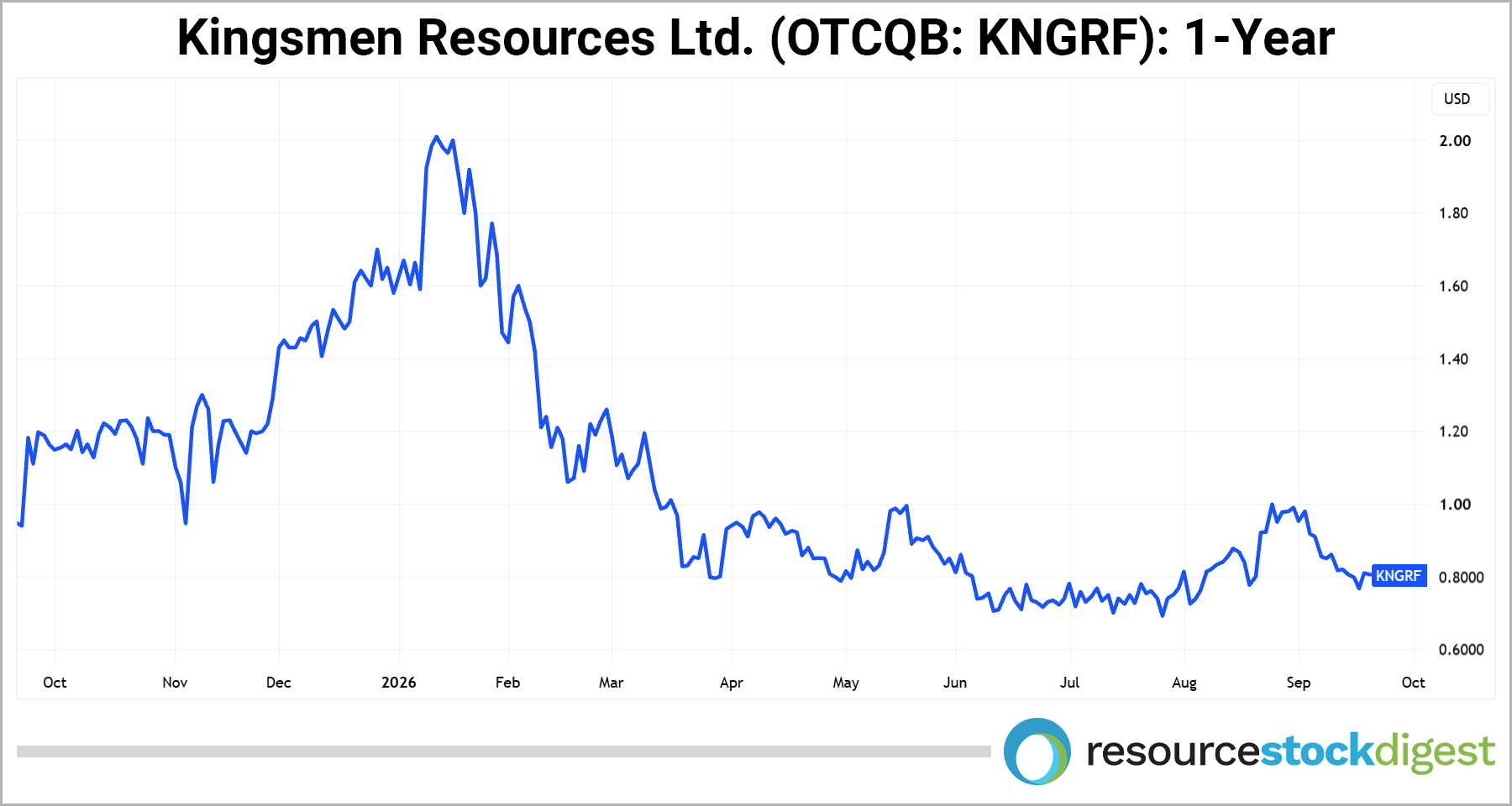
With gold above US$4,300/oz, silver north of US$65/oz — and with more drilling and assays straight ahead — Kingsmen has ample opportunity to significantly advance the Parral story.
For resource speculators, that makes the near-term catalyst window particularly important.
Now it’s up to the drill bit to show just how big the Parral story can get.
As that story unfolds, a great place to further your due diligence is the company’s corporate website where you can view the projects, meet the team, and sign up for direct updates from the company.
View the most recent Corporate Presentation here.
Kingsmen Resources Ltd. trades on the TSX-V under the symbol KNG and on the US OTCQB under the symbol KNGRF.
— Resource Stock Digest Research
Click here to see more from Kingsmen ResourcesIMPORTANT DISCLAIMER & DISCLOSURES
Resource Stock Digest, as a publisher, is not a broker, investment advisor, or financial advisor in any jurisdiction.
Please do not rely on the information presented by Resource Stock Digest as personal investment advice.
If you need personal investment advice, kindly reach out to a qualified and registered broker, investment advisor, or financial advisor.
The communications from Resource Stock Digest should not form the basis of your investment decisions. Examples we provide regarding share price increases related to specific companies are based on randomly selected time periods and should not be taken as an indicator or predictor of future stock prices for those companies.
Kingsmen Resources has sponsored this report.
The information in this newsletter does not constitute an offer to sell or a solicitation of an offer to buy any securities of a corporation or entity, including U.S. Traded Securities or U.S. Quoted Securities, in the United States or to U.S. Persons. Securities may not be offered or sold in the United States except in compliance with the registration requirements of the Securities Act and applicable U.S. state securities laws or pursuant to an exemption therefrom.
Any public offering of securities in the United States may only be made by means of a prospectus containing detailed information about the corporation or entity and its management as well as financial statements. No securities regulatory authority in the United States has either approved or disapproved of the contents of any newsletter. Neither Resource Stock Digest nor any employee of Resource Stock Digest is registered with the United States Securities and Exchange Commission (the “SEC”): as a “broker-dealer” under the Exchange Act, as an “investment adviser” under the Investment Advisers Act of 1940, or in any other capacity. Resource Stock Digest, its owners, directors, and employees are also not registered with any state securities commission or authority as a broker-dealer or investment advisor or in any other capacity.
HIGHLY BIASED:
In our role, we aim to highlight specific companies for your further investigation; however, these are not stock recommendations, nor do they constitute an offer or sale of the referenced securities. Resource Stock Digest has received cash compensation from Kingsmen Resources and is thus extremely biased. It is crucial that you conduct your own research prior to investing. This includes reading the companies' SEDAR and SEC filings, press releases, and risk disclosures. The information contained in our profiles is based on data provided by the companies, extracted from SEDAR and SEC filings, company websites, and other publicly available sources.
Resource Stock Digest, and its owners, directors, employees, and members of their households may own shares of Kingsmen Resources. Therefore, Resource Stock Digest is extremely biased. Measures are in place such that no shares will be sold during the active awareness campaign.
HIGH RISK:
The securities issued by the companies we feature should be seen as high risk; if you choose to invest, despite these warnings, you may lose your entire investment. You must be aware of the risks and be willing to accept them in order to invest in financial instruments, including stocks, options, and futures.
NOT PROFESSIONAL ADVICE:
By reading this, you agree to all of the following: You understand this to be an expression of opinions and NOT professional advice. You are solely responsible for the use of any content and hold Resource Stock Digest, and all partners, members, and affiliates harmless in any event or claim. While Resource Stock Digest strives to provide accurate and reliable information sourced from believed-to-be trustworthy sources, we cannot guarantee the accuracy or reliability of the information. The information provided reflects conditions as they are at the moment of writing and not at any future date. Resource Stock Digest is not obligated to update, correct, or revise the information post-publication.
FORWARD-LOOKING STATEMENTS:
Certain information presented may contain or be considered forward-looking statements. Such statements involve known and unknown risks, uncertainties, and other factors that may cause actual results or events to differ materially from those anticipated in these statements. There can be no assurance that any such statements will prove to be accurate, and readers should not place undue reliance on such information. Resource Stock Digest does not undertake any obligations to update the information presented or to ensure that such information remains current and accurate.